Multi-Channel RL-Assisted MPC
RESEARCH CASE STUDY
Multi-Channel RL-Assisted MPC
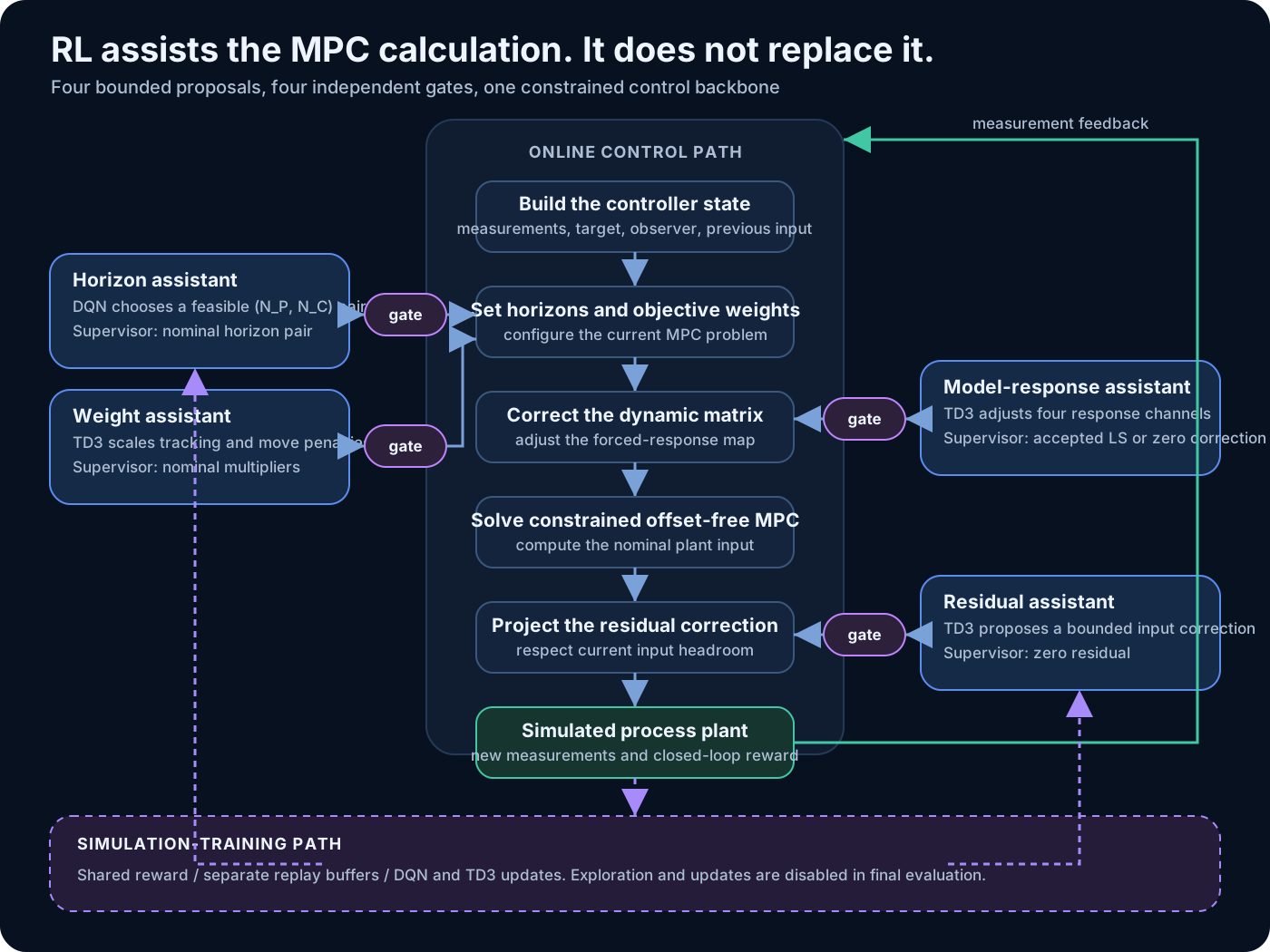
Designed a four-channel RL-assisted MPC architecture in which DQN and TD3 agents propose bounded controller adjustments and channel-specific critic gates decide whether to use each learned proposal or a conservative supervisor action.
System architecture
Contribution and implementation
The horizon channel uses DQN for discrete prediction/control-horizon selection, while TD3 agents continuously adjust objective weights, correct the dynamic matrix, and propose a constrained residual-input correction around the MPC backbone.
Each channel has its own critic-based selector. A learned proposal must exceed its supervisor alternative by a configured advantage margin; ties, non-finite scores, and policies that are not ready default to the supervisor.
Simulation training uses the executed actions and a common control reward with mixed prioritized, recent, and uniform replay. Learned proposals are released only after data collection and critic-learning phases, and the final evaluation episode disables exploration and network updates.
Implementation: Python · PyTorch
Results and evaluation
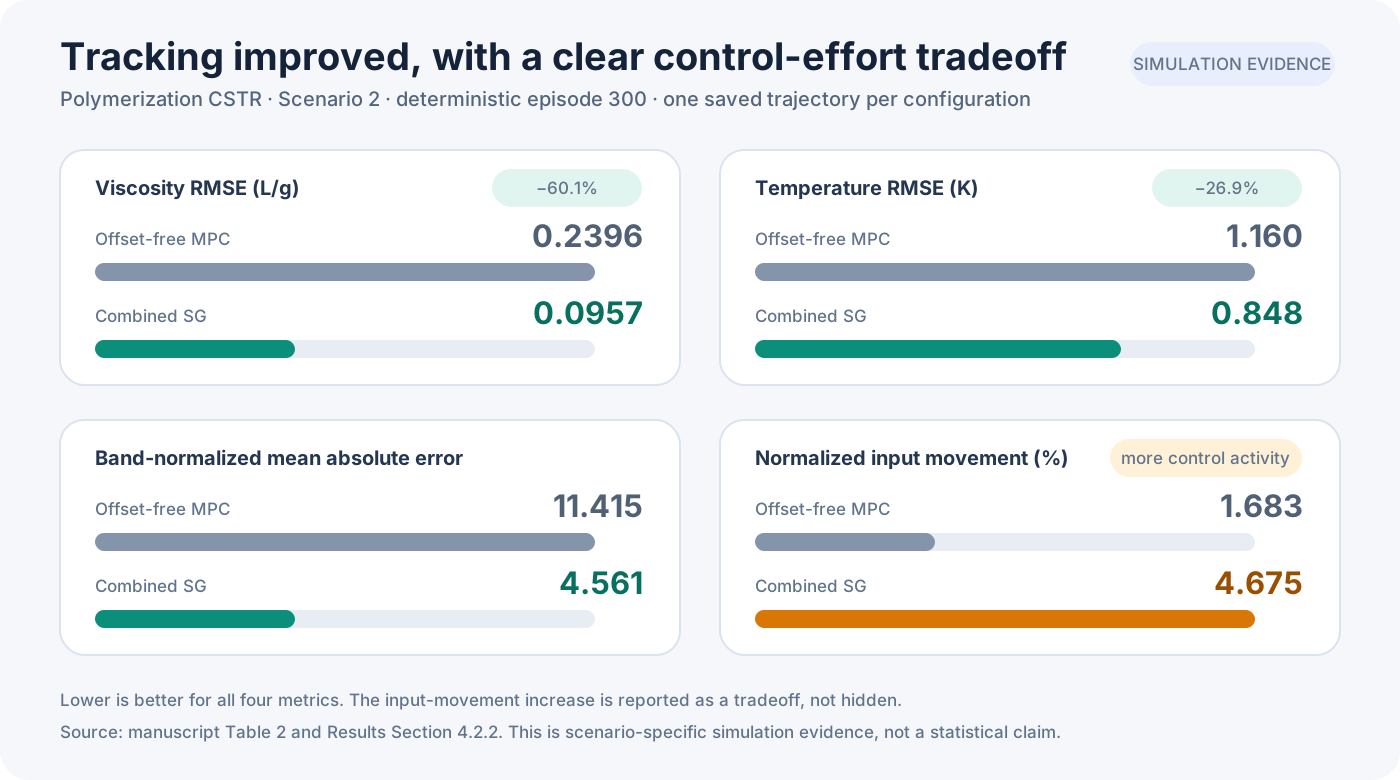
Polymerization Scenario 2, one saved deterministic evaluation trajectory: combined gated assistance reduced viscosity RMSE from 0.2396 to 0.0957 L/g and temperature RMSE from 1.160 to 0.848 K relative to offset-free MPC. Band-normalized error fell from 11.415 to 4.561, while normalized input movement increased from 1.683% to 4.675%.
Distillation Scenario 2, one saved deterministic evaluation trajectory: combined gated assistance reduced composition RMSE from 0.00427 to 0.00320 and temperature RMSE from 0.4022 to 0.1252 degrees C relative to offset-free MPC. Joint acceptable-band occupancy increased from 76.25% to 91.75%, while normalized input movement increased from 0.418% to 0.625%.
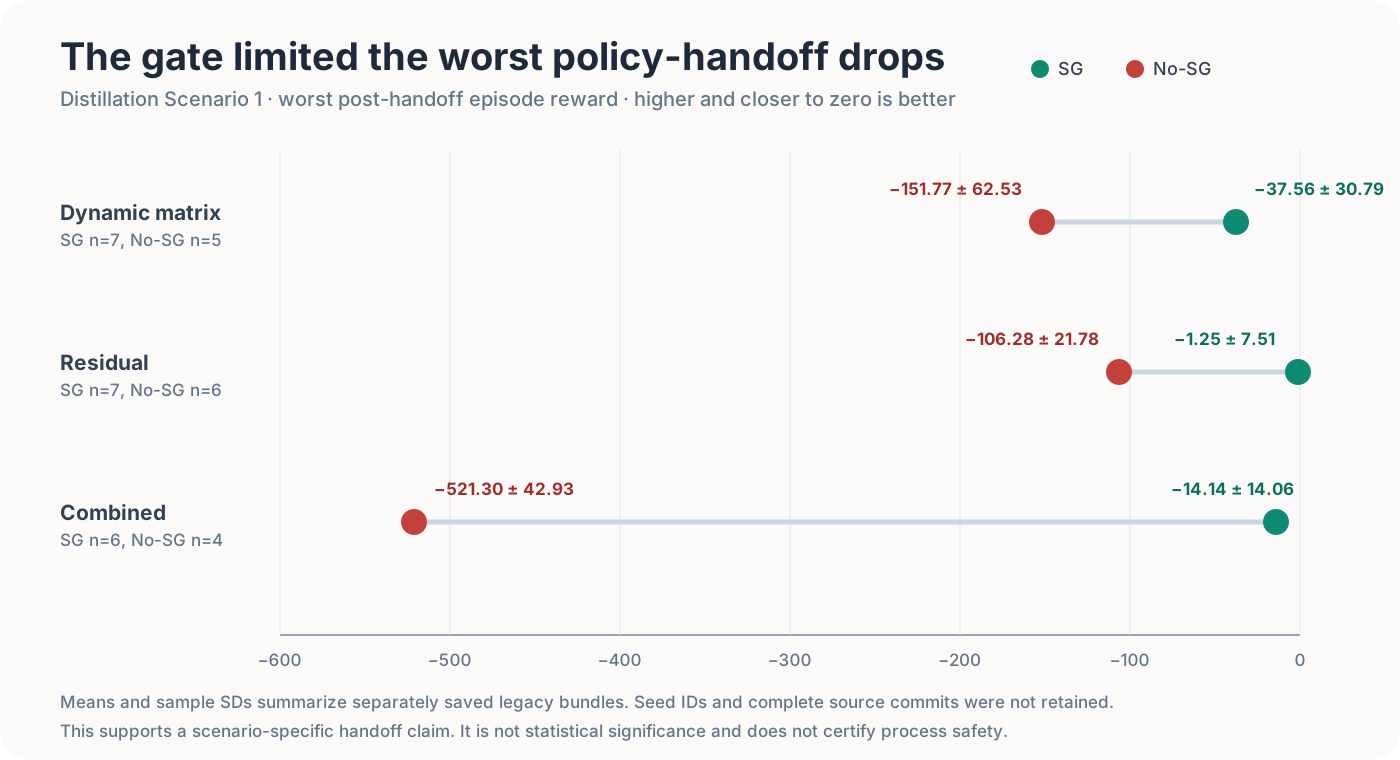
Distillation Scenario 1 descriptive saved-run ensembles: mean worst post-handoff reward for combined assistance was -14.14 +/- 14.06 with gating (n=6) versus -521.30 +/- 42.93 without gating (n=4). These values are descriptive means and one sample standard deviation, not confidence intervals or a significance result.
Limitations and evidence maturity
The evidence is limited to nonlinear polymerization and Aspen Dynamics distillation simulations; it does not establish laboratory, pilot-plant, or production deployment, formal closed-loop stability, recursive feasibility, or physical safety.
Scenario 2 uses one saved trajectory per configuration. Repeated Scenario 1 studies have unequal run counts and incomplete seed and commit provenance, and no leave-one-channel-out combined ablation establishes the causal contribution of each assistance channel.