2022 - Expected Jan 2027
PhD Process Systems Engineering
McMaster University
Machine Learning Engineer | Reinforcement Learning Researcher | Process Systems & Control Engineer
At the intersection of
learning and engineering.
I am a machine-learning and process-systems engineer working across reinforcement learning, scientific machine learning, and control. I develop data-driven methods for complex process systems in simulation and laboratory settings.

6 case studies spanning reinforcement learning, scientific machine learning, control, laboratory experimentation, and data engineering.
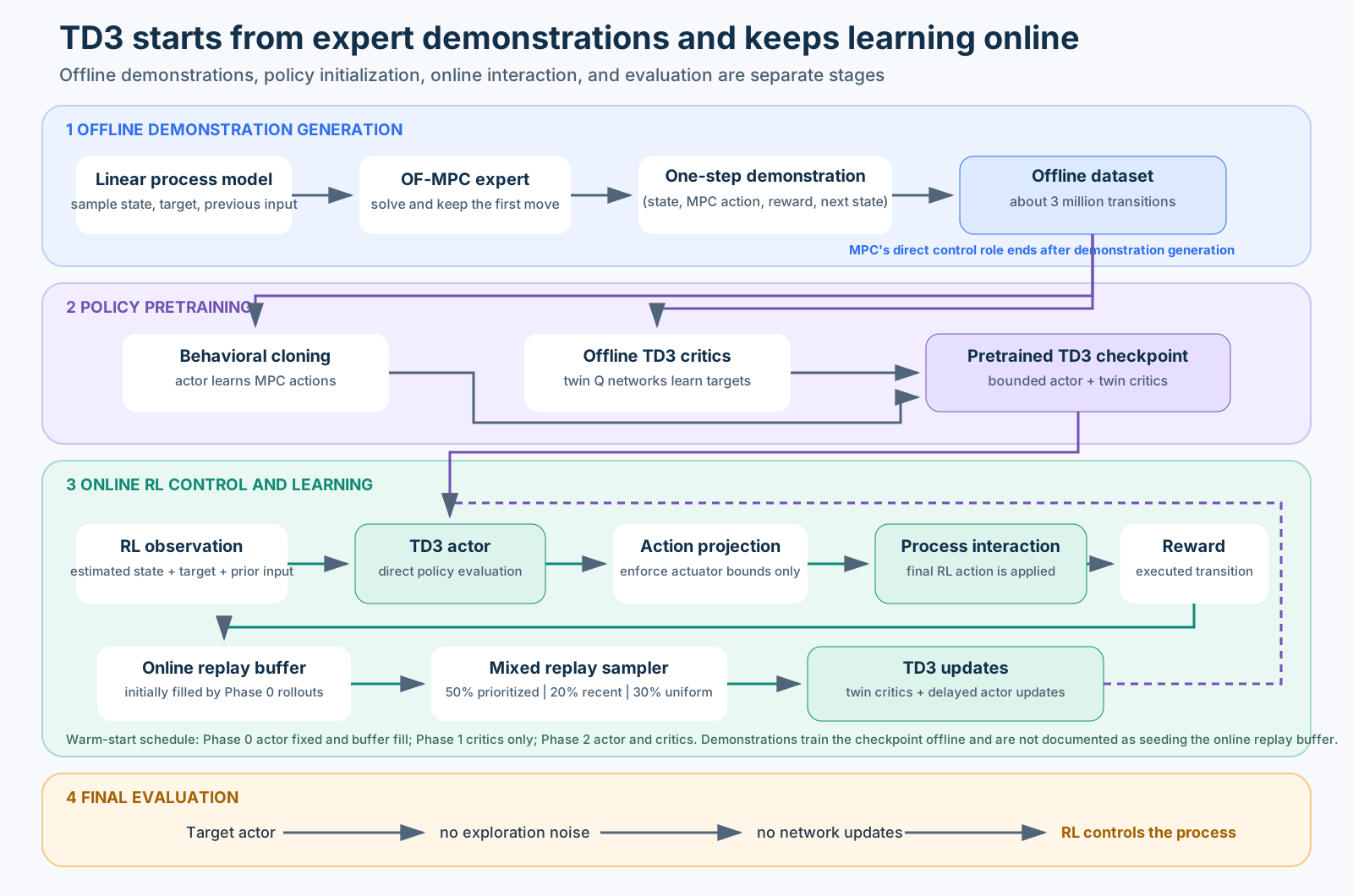
Developed an RL-centered workflow that initializes Twin Delayed Deep Deterministic Policy Gradient (TD3) from model predictive control demonstrations, then gives the neural policy direct control and online adaptation across polymer-reactor and Aspen Dynamics C2-splitter simulations.
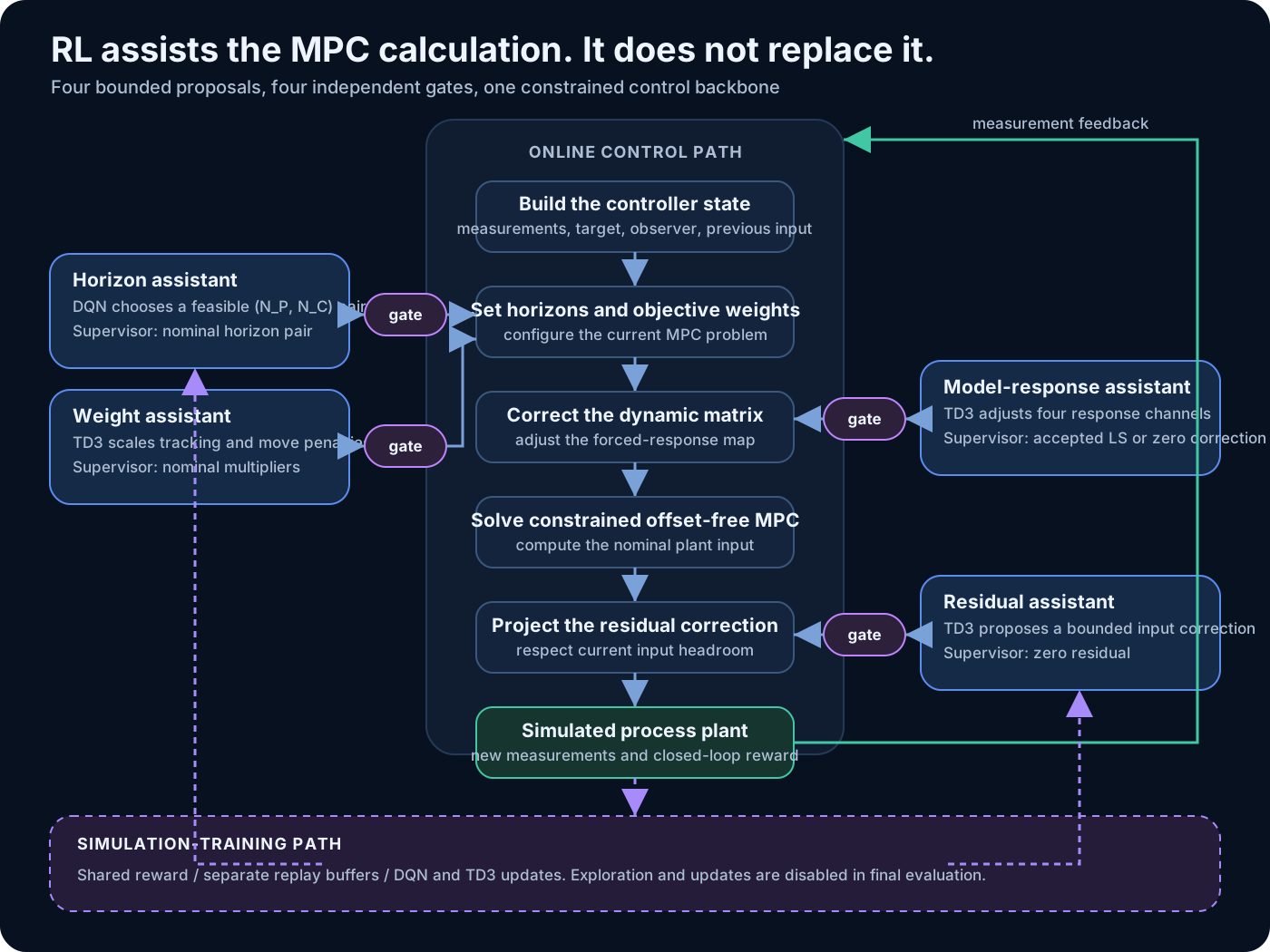
Designed a four-channel RL-assisted MPC architecture in which DQN and TD3 agents propose bounded controller adjustments and channel-specific critic gates decide whether to use each learned proposal or a conservative supervisor action.
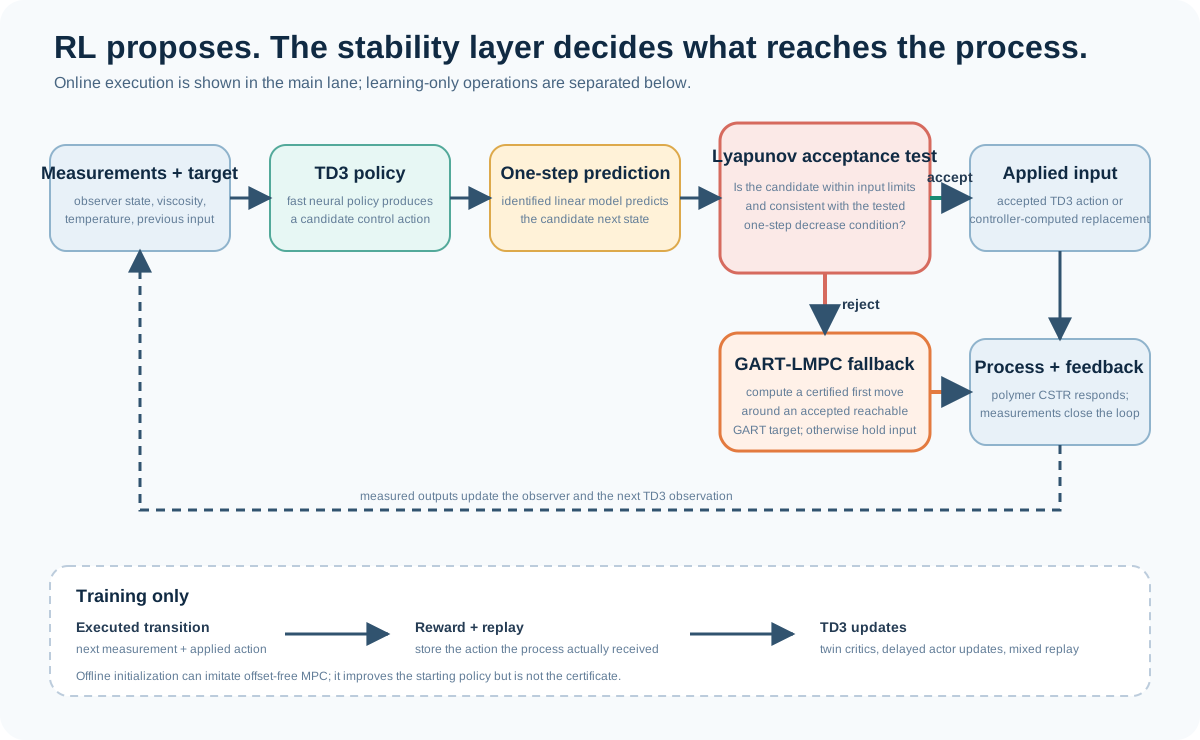
Developed an RL-first control architecture in which TD3 proposes continuous coolant and monomer flow commands and a Lyapunov-guided GART-LMPC layer evaluates each move before it is applied to a simulated polymerization reactor.
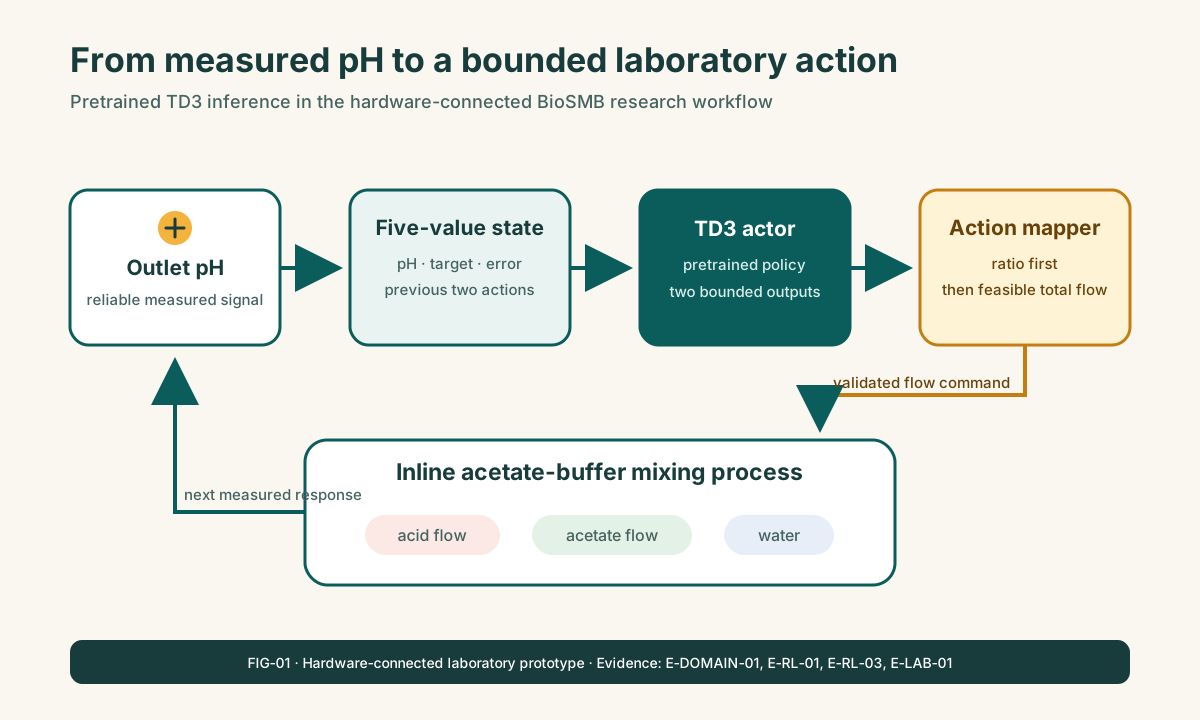
A simulation-pretrained TD3 policy generated bounded acid/base flow decisions during a 4.55-hour BioSMB laboratory run across a changing pH sequence.
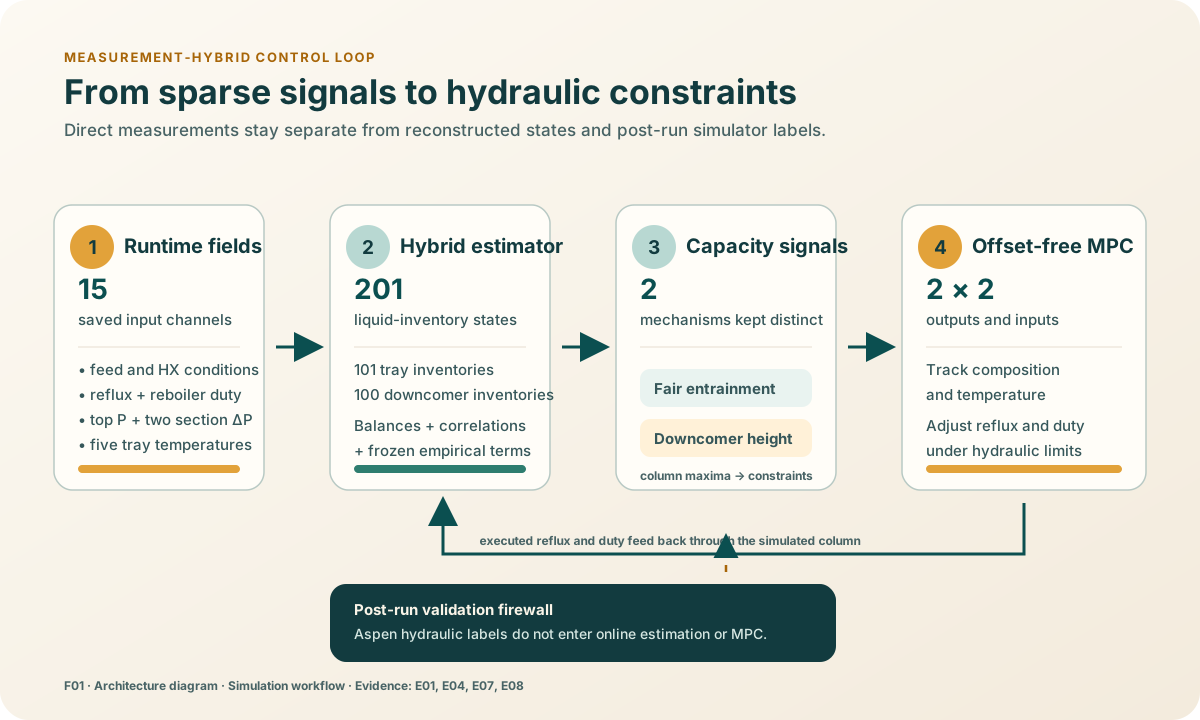
A measurement-hybrid 201-state hydraulic estimator uses 15 runtime fields to supply interpretable Fair and downcomer coordinates to constrained model predictive control in an Aspen Dynamics simulation.
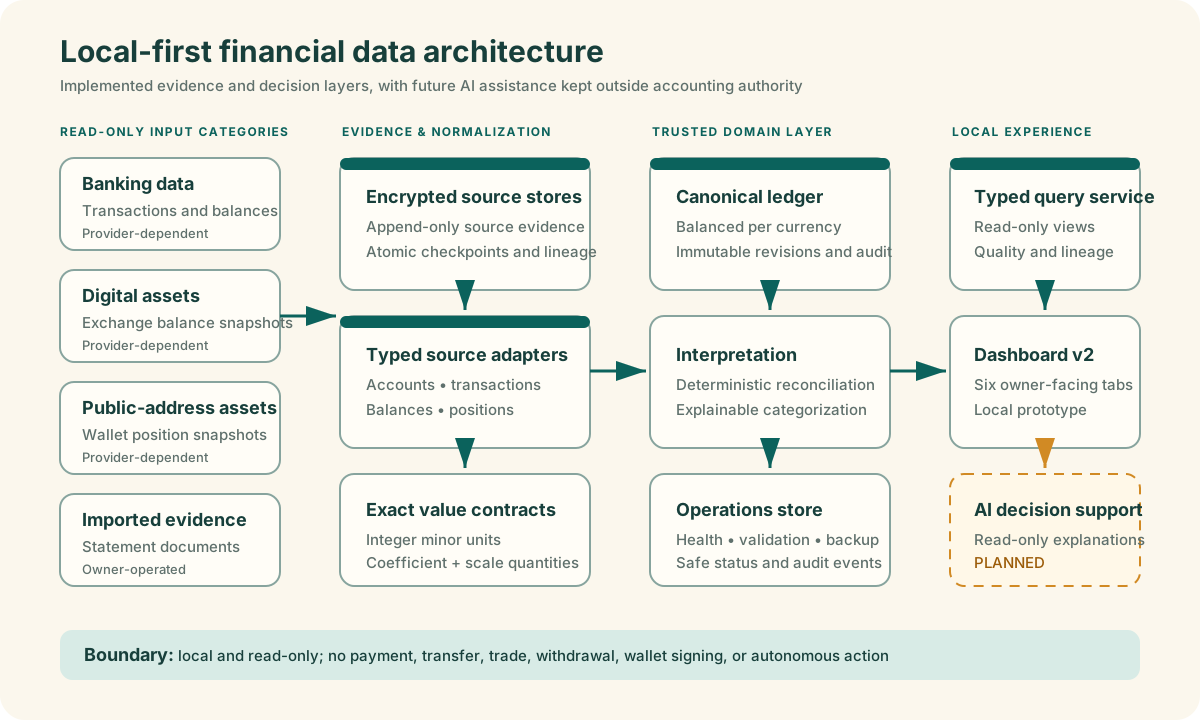
Finance Assistance is a local-first platform that converts heterogeneous financial records into traceable accounting and read-only analytics, with guarded machine-learning categorization and a planned path toward human-reviewed AI portfolio decision support.
01
Value-based, actor-critic, and policy-optimization methods for discrete and continuous control, including DQN, TD3, TD7, and SAC; behavioral cloning, imitation learning, advanced experience replay, offline-to-online learning, and safe-RL action screening.
02
Deep-learning architectures spanning convolutional, recurrent, attention-based, and sequence-modeling methods; time-series modeling, PINNs, generative models, PCA/PLS, autoencoders, clustering, classical machine learning, and LLM applications.
03
Linear and nonlinear control, model predictive control, linear and nonlinear optimization, and metaheuristic optimization for nonlinear process systems.
04
Python, PyTorch, MATLAB/Simulink, Aspen Plus/Dynamics, Pyomo/IPOPT, SQL, Power BI, Tableau, Minitab, Git, and LaTeX; laboratory automation and hardware integration.
McMaster University
Research in deep reinforcement learning, safe reinforcement learning, scientific machine learning, and control for nonlinear process systems across simulation, Aspen Dynamics, and laboratory experimentation.
McMaster University
Supported Process Control, Transport Phenomena, and Reactor Design through tutorials, grading, student consultation, and examination support.
2026
Amir Hossein Hamedi, Hesam Hassanpour, Ankur Kumar, Atharva Vijay Suryavanshi, Prashant Mhaskar
Industrial & Engineering Chemistry Research
2026
Amir Hossein Hamedi, Hesam Hassanpour, Ankur Kumar, Atharva Vijay Suryavanshi, Prashant Mhaskar
Computers & Chemical Engineering
2026
Amir Hossein Hamedi, Ankur Kumar, Atharva Vijay Suryavanshi, Prashant Mhaskar
Optimal Control Applications and Methods
06 / Let’s connect
I welcome conversations about intelligent process systems, control, machine learning, reinforcement learning, and applied research collaborations.