MPC-Pretrained Reinforcement Learning
RESEARCH CASE STUDY
MPC-Pretrained Reinforcement Learning
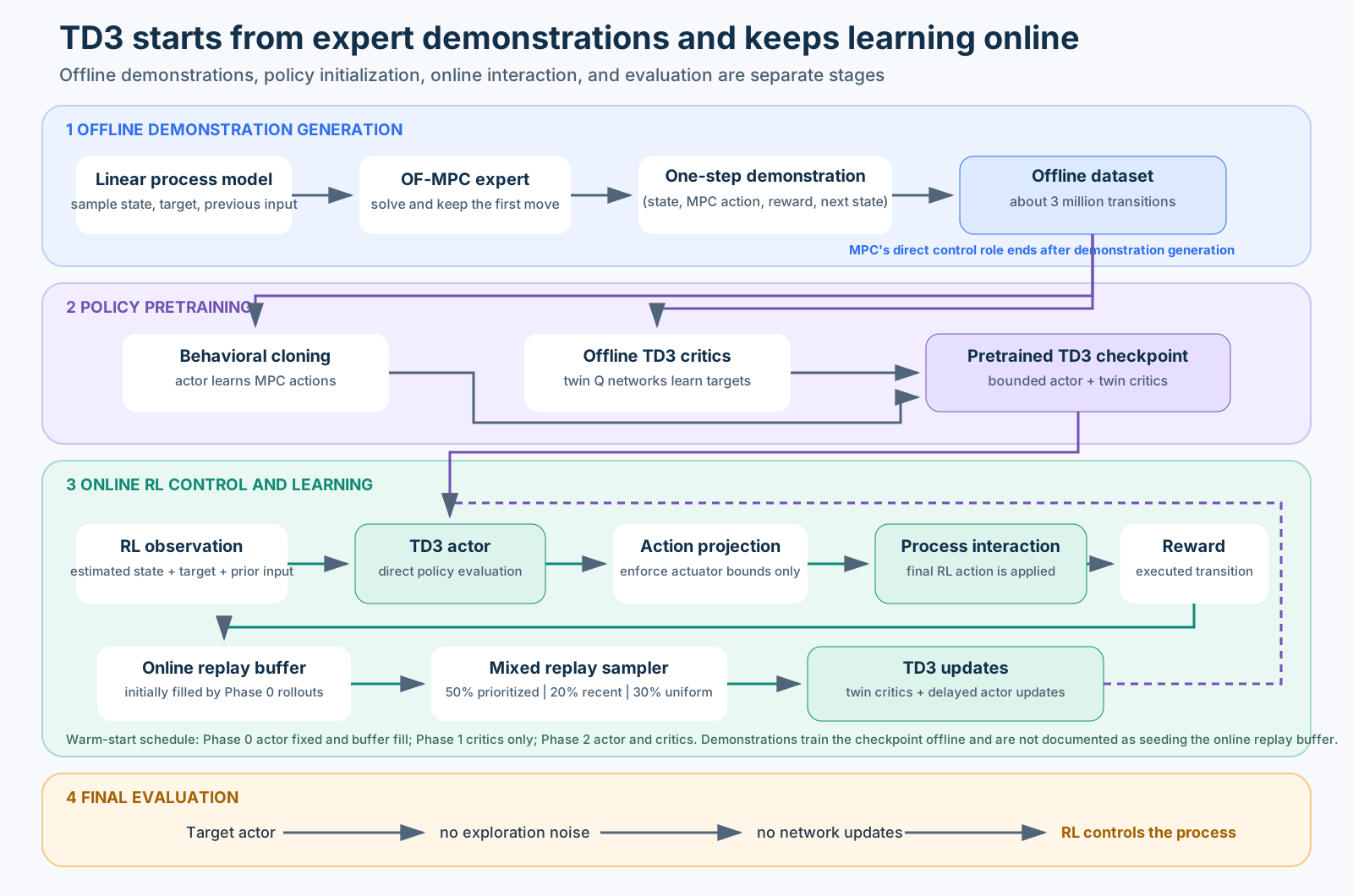
Developed an RL-centered workflow that initializes Twin Delayed Deep Deterministic Policy Gradient (TD3) from model predictive control demonstrations, then gives the neural policy direct control and online adaptation across polymer-reactor and Aspen Dynamics C2-splitter simulations.
System architecture
Contribution and implementation
An offline MPC expert generated about three million one-step transitions; behavioral cloning trained the bounded TD3 actor, while twin critics were initialized from the same offline experience.
TD3 observes the estimated process state, output target, and previous input, then directly generates bounded continuous commands for the polymer reactor or C2 splitter without runtime MPC control.
Online transfer uses replay warm-up, critic-only refinement, and joint actor-critic updates, followed by offset-aware reward shaping and a replay mixture of prioritized, recent, and uniform experience.
Implementation: Python · PyTorch · Aspen Dynamics
Results and evaluation
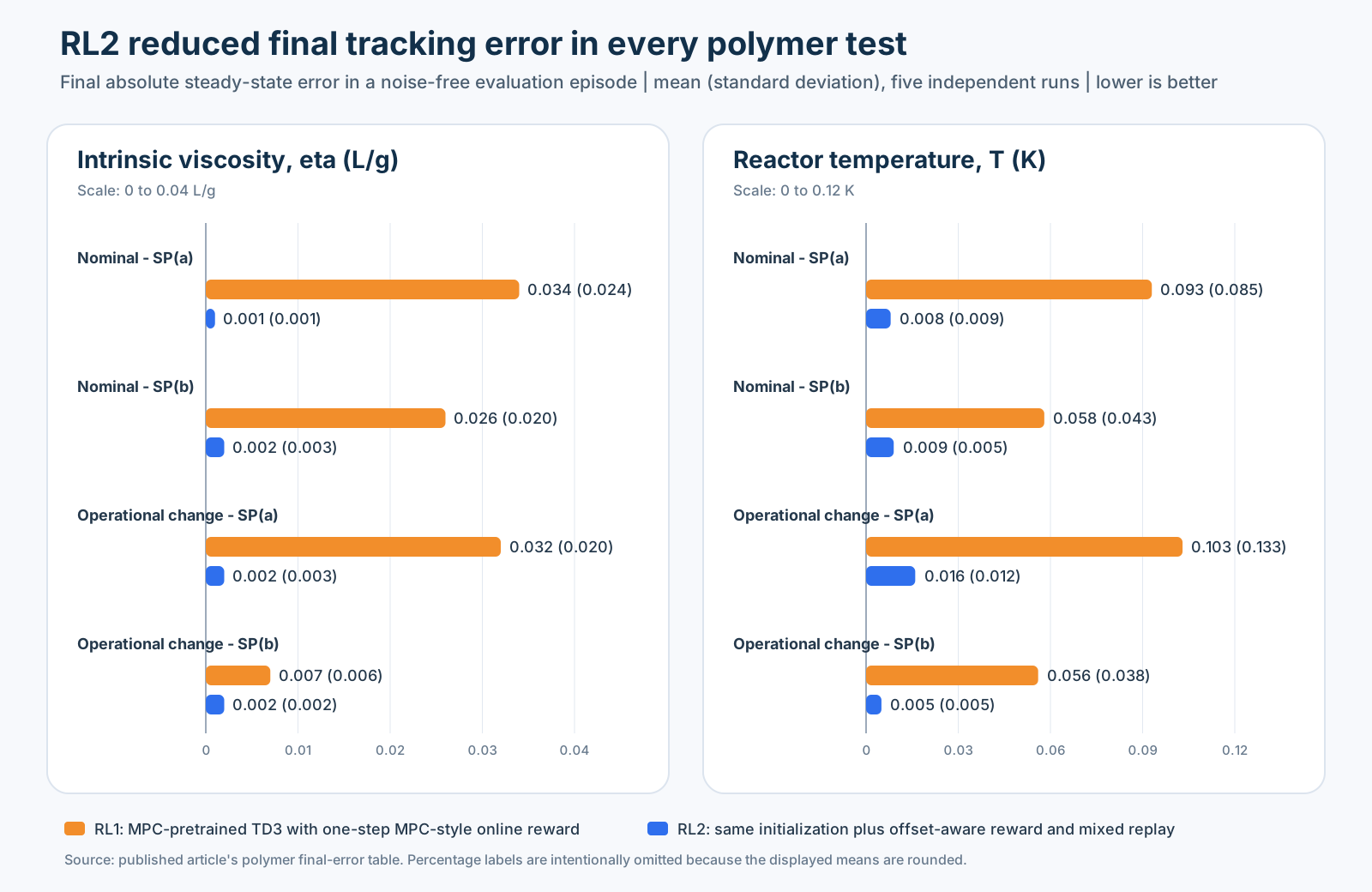
Across five independent polymer-reactor simulation runs, RL2 achieved a lower mean final absolute steady-state error in all eight comparisons; at nominal SP(a), viscosity error decreased from 0.034 plus or minus 0.024 to 0.001 plus or minus 0.001 L/g.
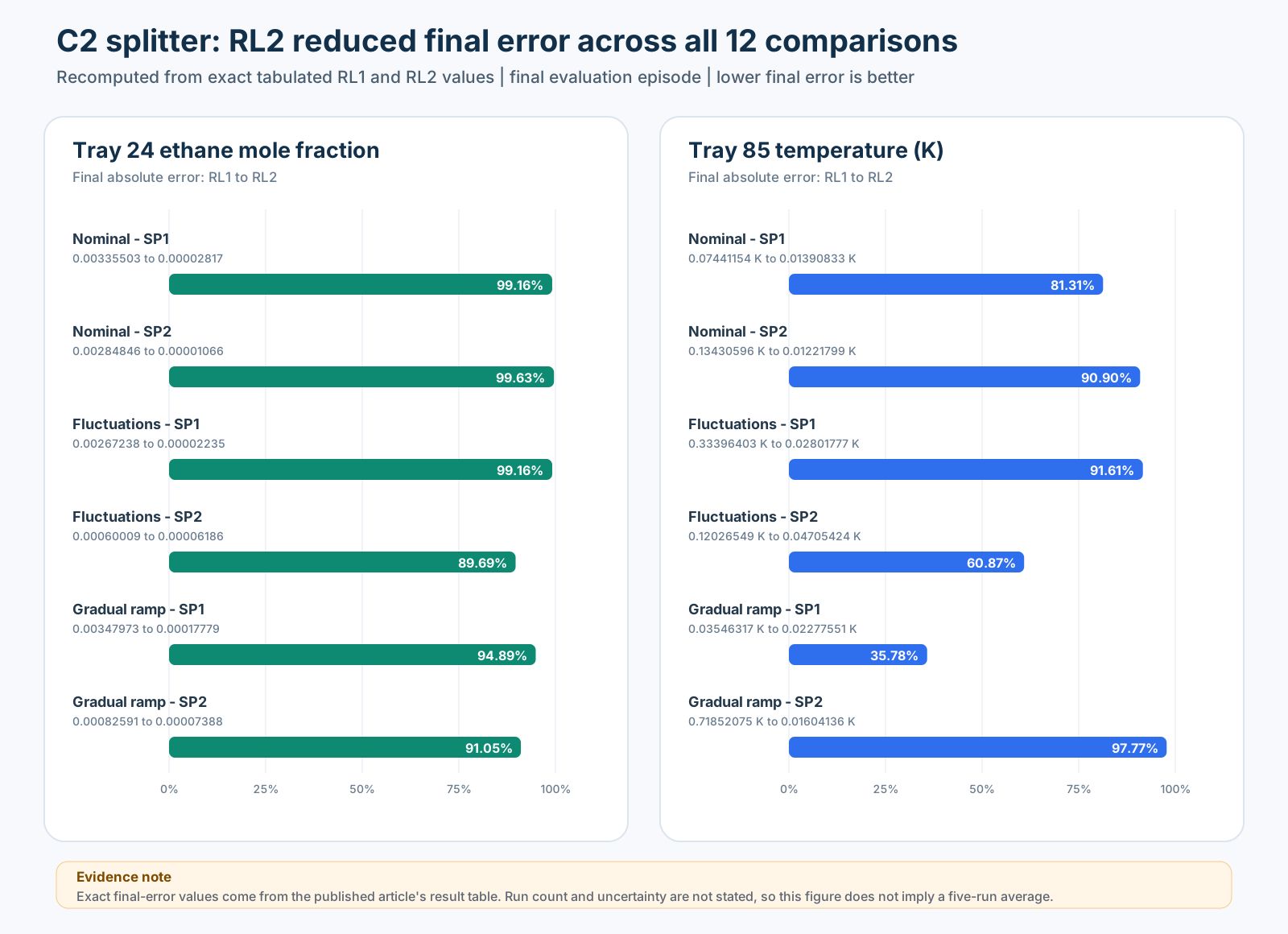
RL2 achieved a lower final absolute steady-state error in all 12 tabulated C2-splitter simulation comparisons; across the six ethane-composition cases, recomputed reductions ranged from 89.69% to 99.63%, with run count and uncertainty not stated in the source table.
The Aspen Dynamics loop required approximately 1 second per online control step, including learning operations, compared with a 10-minute control interval; the polymer study’s complete 200-episode online run required approximately 20 minutes.
Limitations and evidence maturity
All reported evaluations are simulation-based; the work does not demonstrate laboratory or plant deployment, and the C2 result table does not report a run count or uncertainty.
The reported simulations enforced actuator bounds only; policy pretraining is not a formal guarantee of stability, safety, or broader constraint satisfaction, and reward shaping and mixed replay were not separated in a complete ablation.