Distillation Flooding Detection and Control

All research & projects

RESEARCH CASE STUDY

Distillation Flooding Detection and Control

A measurement-hybrid 201-state hydraulic estimator uses 15 runtime fields to supply interpretable Fair and downcomer coordinates to constrained model predictive control in an Aspen Dynamics simulation.

Collaboration

Imperial Oil

Role

Developed and audited the measurement contract, simplified tray and downcomer hydraulics, pressure and property reconstruction, constrained-control integration, paired simulation evaluation, and model-versus-Aspen validation workflow.

Methods

measurement-hybrid hydraulics · constrained MPC · model-versus-Aspen validation

System architecture

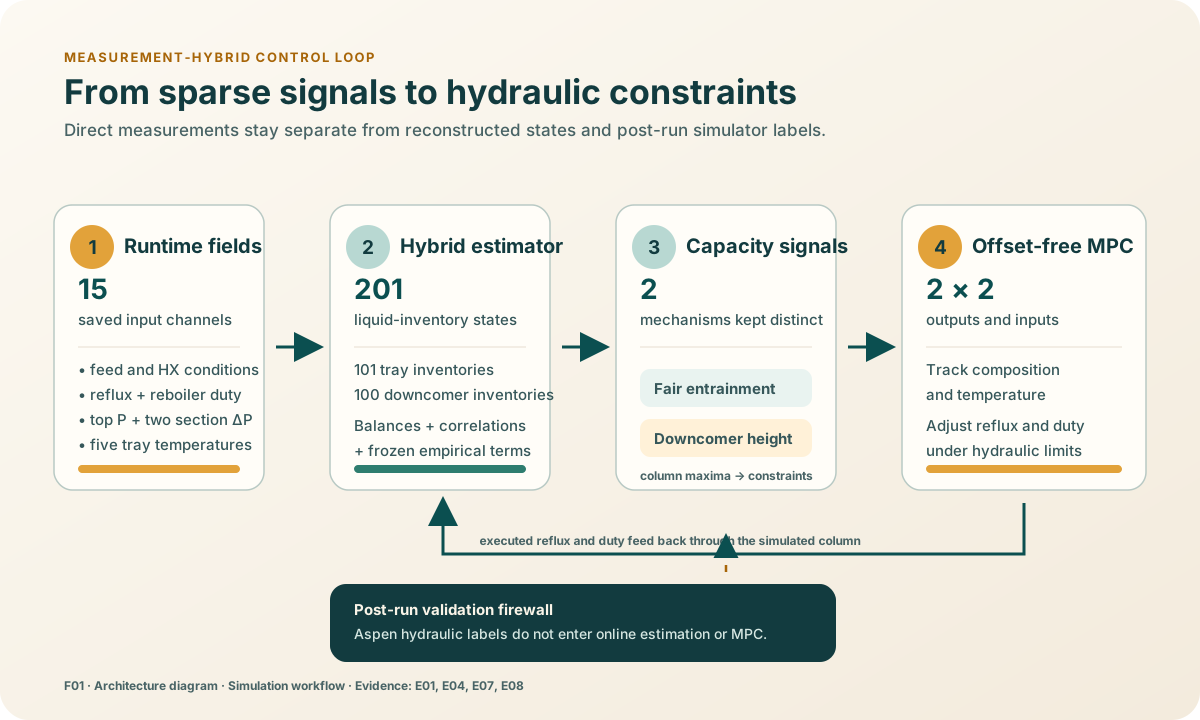
Left-to-right workflow showing sparse process measurements entering a 201-state hydraulic estimator, producing two flooding coordinates for offset-free MPC, with a separate dashed path to post-run Aspen validation.

Fifteen runtime fields feed a measurement-hybrid hydraulic estimator; reconstructed Fair and downcomer coordinates inform constrained MPC while Aspen labels remain isolated until post-run validation.

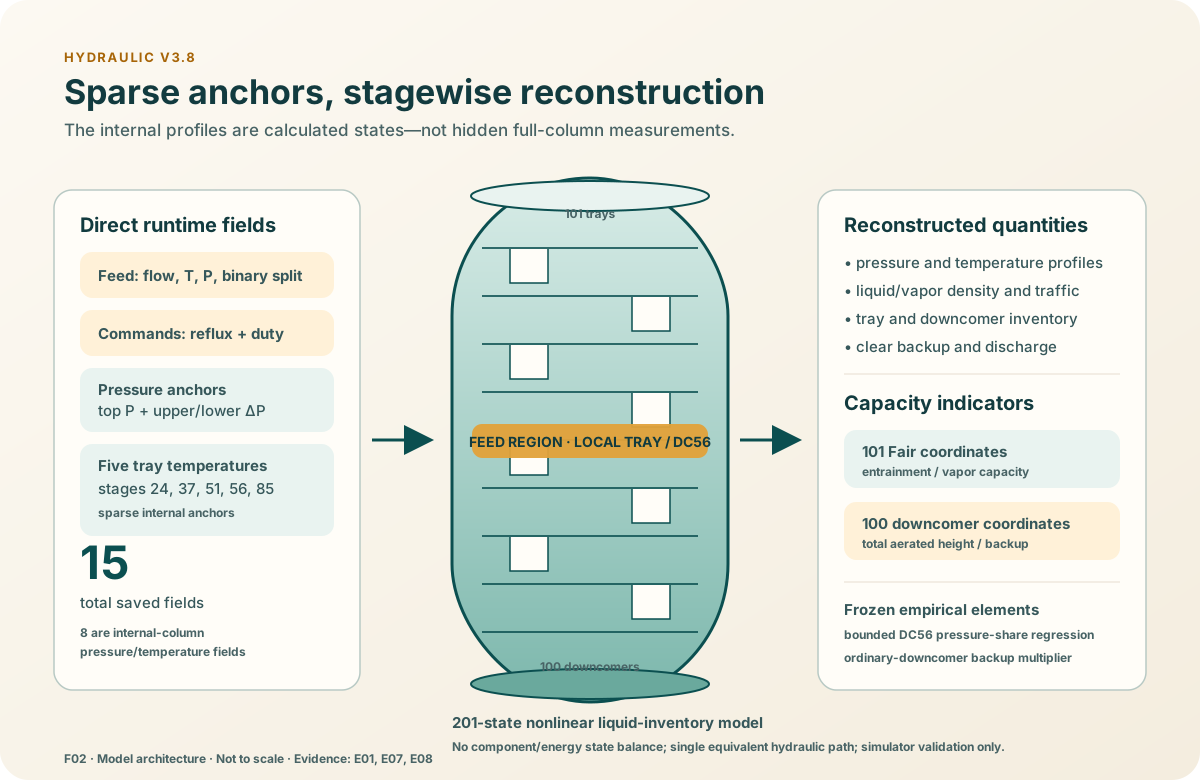
Stylized distillation column with a highlighted feed tray, tray and downcomer inventories, measured inputs on one side, and reconstructed pressure, density, traffic, backup, and flooding indicators on the other.

The reduced model represents 101 trays and 100 downcomers, anchored by sparse pressure and temperature measurements and supplemented by frozen empirical corrections.

Contribution and implementation

  • A measurement firewall uses five tray-temperature anchors, top pressure, two section differential pressures, feed conditions, and manipulated inputs while keeping full simulator-only profiles and flooding labels out of the online estimator.

  • The reduced model reconstructs 101 tray inventories and 100 downcomer inventories and retains separate Fair entrainment and total-aerated downcomer utilization coordinates.

  • A matched 16,000-step comparison evaluates soft hydraulic constraints around an offset-free MPC while preserving exact trajectory, solver, tracking, movement, and post-run validation records.

Implementation: Python · Aspen Dynamics

Results and evaluation

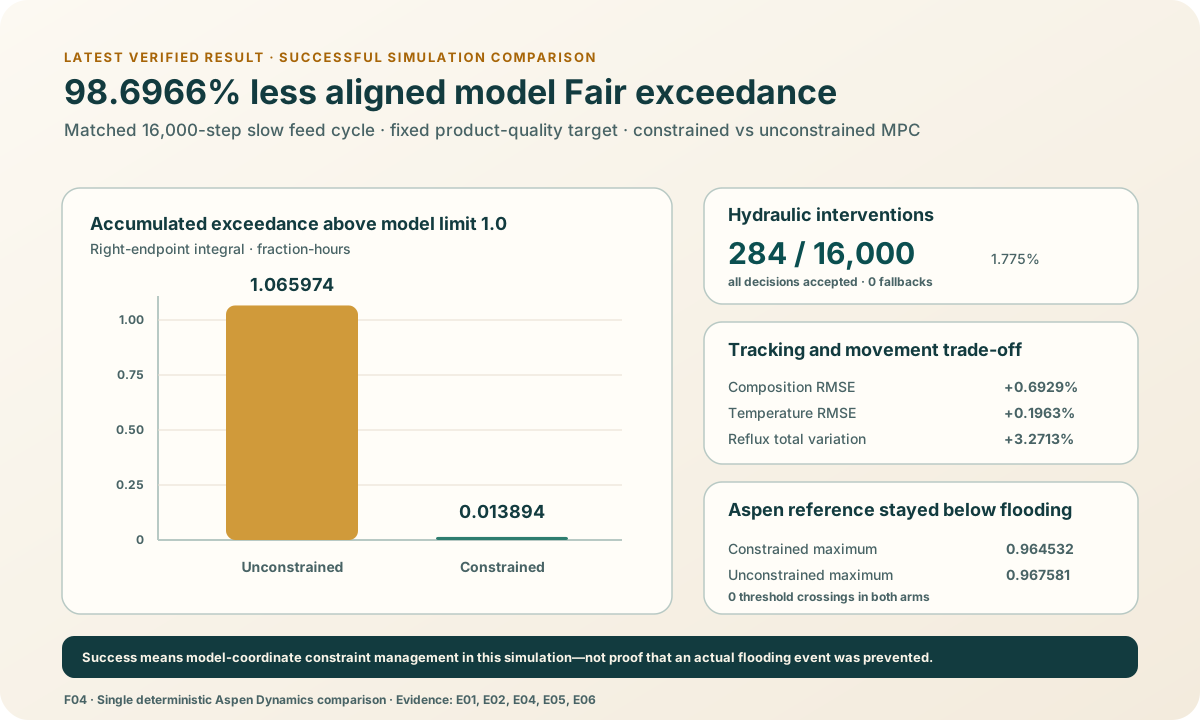
In one matched simulation, hydraulic constraints reduced the aligned model Fair-limit exceedance area from 1.06597 to 0.01389 fraction-hours, a 98.70% reduction; neither Aspen arm crossed its recorded flooding threshold.

All 16,000 constrained decisions were accepted, 284 changed the nominal MPC action, and no controller fallback was recorded.

Against post-run Aspen labels for the constrained run, adjusted clear-backup RMSE was 1.9467 mm across all downcomers and 0.9952 mm at the feed downcomer.
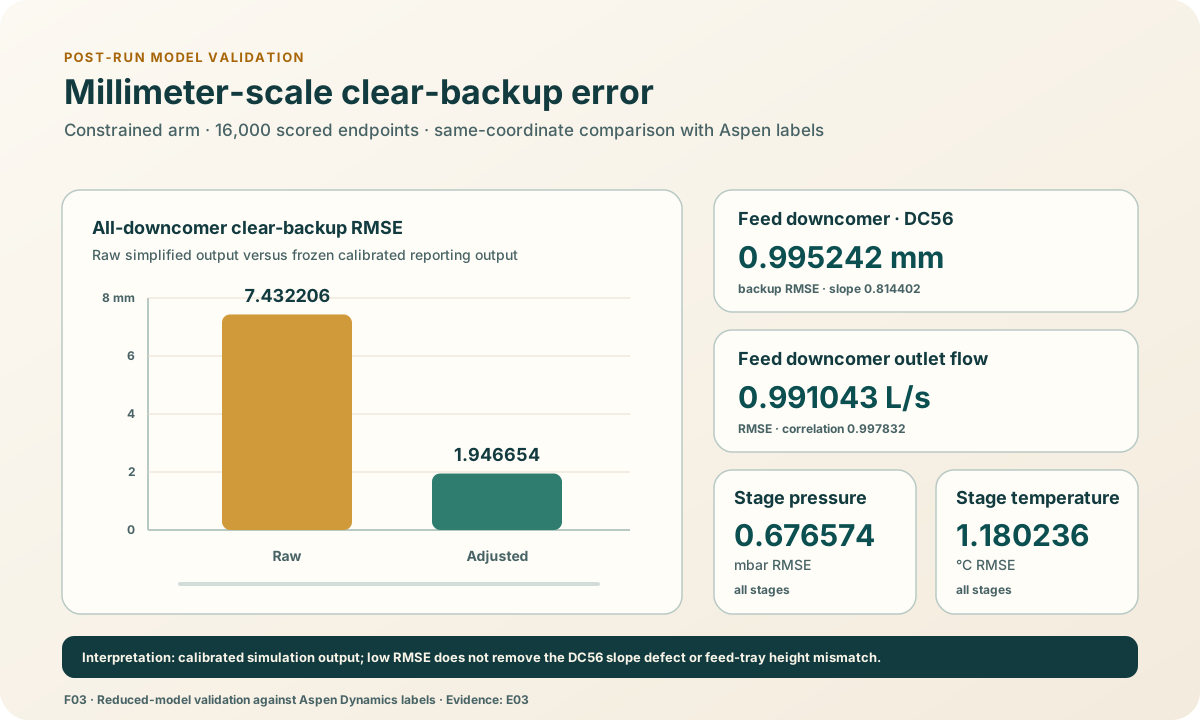
Validation cards and a two-bar comparison showing lower all-downcomer clear-backup RMSE after frozen calibration, plus feed-downcomer flow and stage-pressure accuracy metrics.

Post-run Aspen comparison for the constrained 16,000-step cycle, including adjusted all-downcomer and feed-downcomer clear-backup RMSE.

Bar comparison of constrained and unconstrained model Fair exceedance area with callouts for intervention count, accepted decisions, tracking changes, and the fact that Aspen remained below its flooding threshold in both arms.

In one matched slow feed-cycle simulation, hydraulic constraints reduced aligned model Fair-limit exceedance area by 98.70%; neither Aspen arm crossed its recorded flooding threshold.

Limitations and evidence maturity

  • The evidence is one deterministic simulation comparison: it demonstrates successful management of the reduced model’s near-limit coordinate, not prevention of an actual Aspen or plant flooding event.

  • The downcomer constraint remained inactive, and documented model discrepancy plus process-model timing and observer issues limit broader controller conclusions.